Best Affiliate Management Platforms in 2026: Ultimate Guide
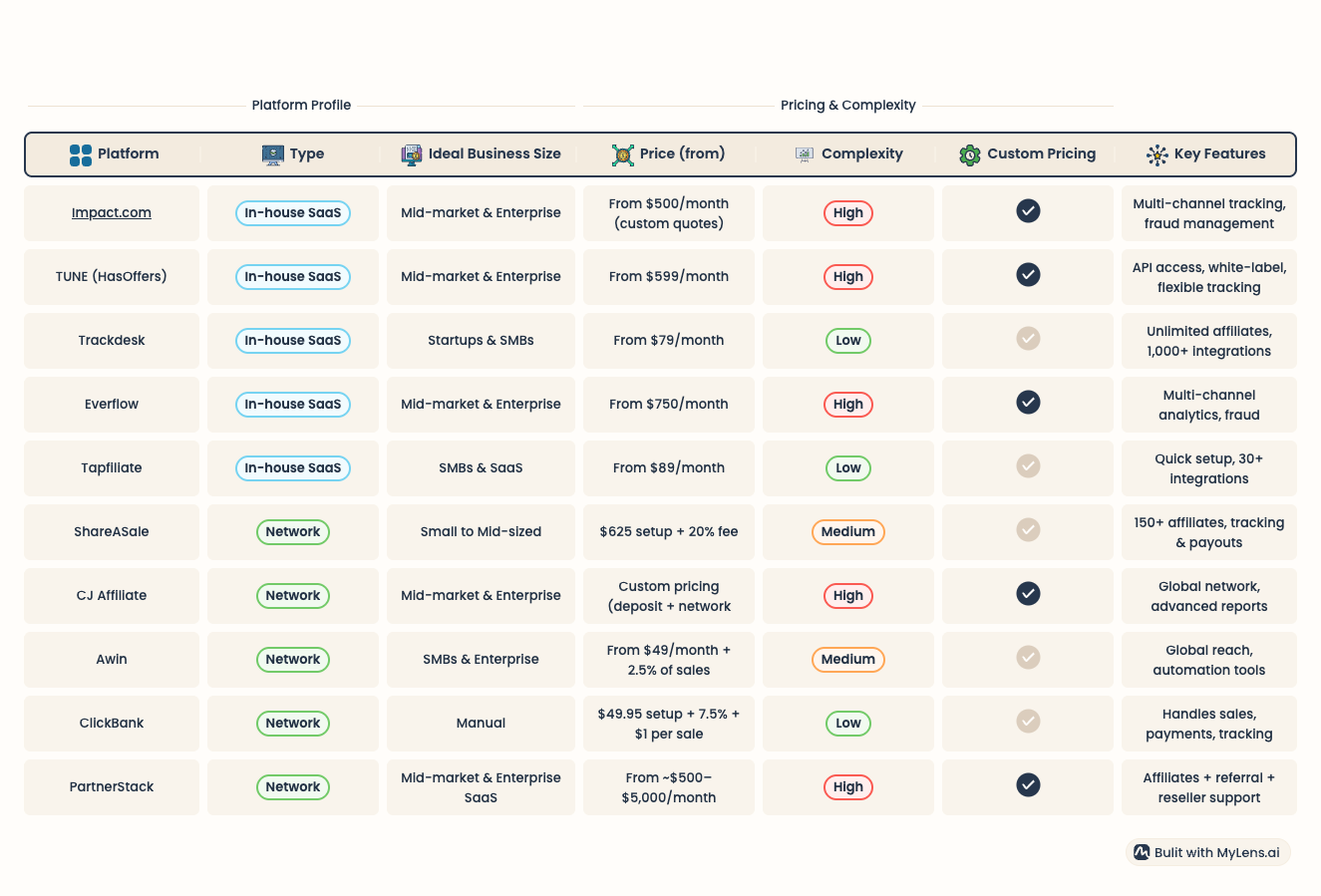
This guide compares the 10 best affiliate management platforms of 2026, their pricing, features, pros, and best use cases.
Dina White
1/21/20264 min read
Affiliate marketing remains one of the strongest ways for businesses to grow sales and reach new audiences. The key to success is choosing the right platform to manage and track your partners. In 2026, there are two main options: in-house affiliate software (SaaS tools that let you run your own program) and affiliate networks (platforms that connect you to a large pool of ready affiliates).
1. Impact.com – Best Enterprise Solution
Impact.com is an all-in-one partnership platform for managing affiliates, influencers, and media partners. It offers deep analytics, automated payouts, and fraud protection. The built-in marketplace helps brands discover and recruit partners quickly.
Pros: Comprehensive tracking, large partner network, strong automation tools.
Cons: Premium pricing (from ~$500/month) and a steep learning curve for small teams.
Best for: Mid-sized and enterprise brands needing multi-channel tracking and partner management.
Final Thoughts
The best platform depends on your business size, budget, and goals. Small businesses can start affordably with Trackdesk, Tapfiliate, or Awin Access. Large enterprises managing global or multi-channel programs should consider Impact, TUNE, or Everflow. Digital sellers will find ClickBank unmatched for speed, while PartnerStack stands out for SaaS companies. Choose the tool that fits your scale today and can grow with you tomorrow.
10. PartnerStack – Best for B2B SaaS
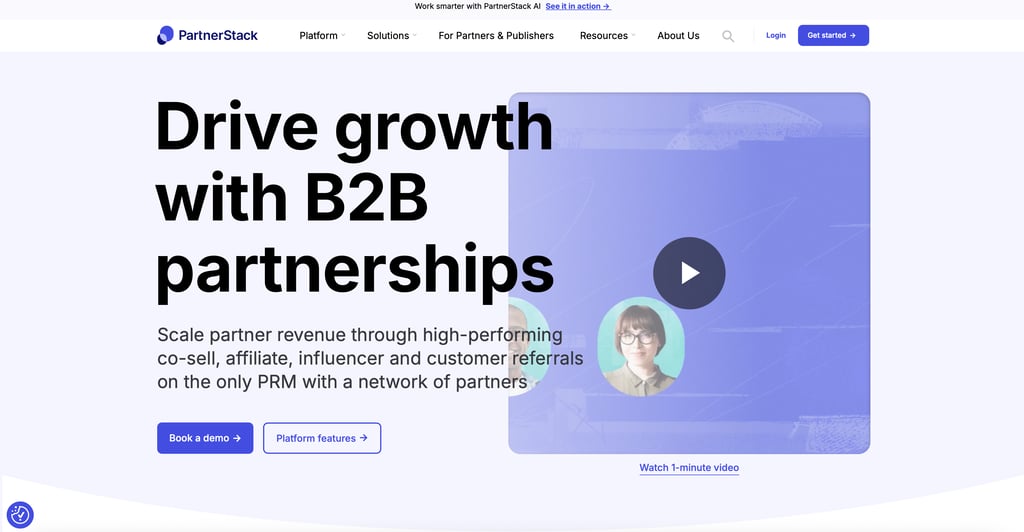
PartnerStack helps SaaS companies run affiliate, referral, and reseller programs. It combines management software with a curated marketplace of B2B partners.
Pros: Tailored for SaaS, automates payouts and onboarding, large partner ecosystem.
Cons: Opaque pricing (usually $500–$1,500/month) and complex setup.
Best for: Mid-market and enterprise SaaS companies scaling partner channels.
9. ClickBank – Best for Digital Product Sellers
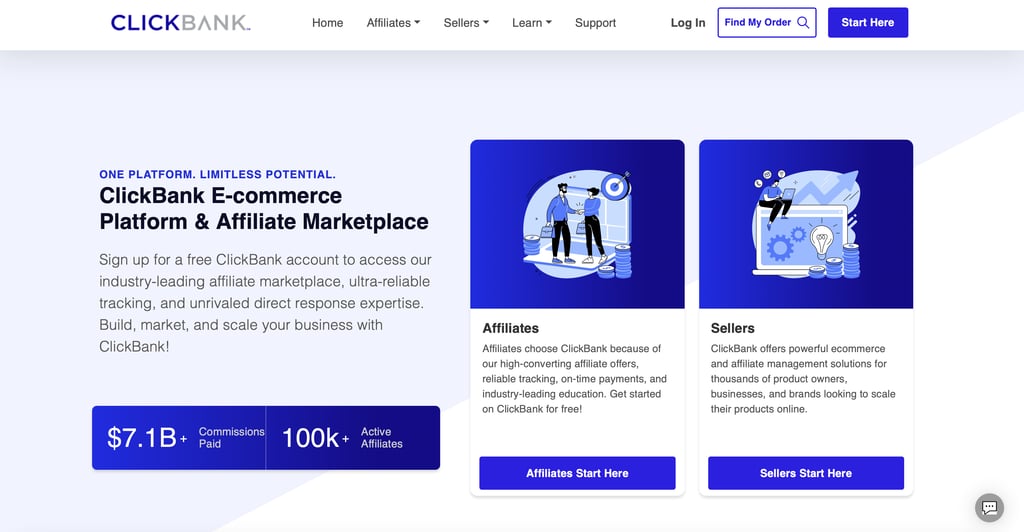
ClickBank is a marketplace and network for digital products like e-books, courses, and software. It handles sales, payments, and affiliate tracking in one place.
Pros: Quick setup, large affiliate pool, and no monthly fees.
Cons: High transaction fees (7.5% + $1 per sale) and mixed product quality.
Best for: Digital creators and solopreneurs selling info-products.
8. Awin – Best for Global and Scalable Programs
Awin offers one of the largest global affiliate networks, serving 30,000+ merchants and 1M+ affiliates. Its Awin Access plan lets small businesses start affordably.
Pros: Global reach, low-cost entry (Access plan at $49/month), and robust reporting.
Cons: 3.5% transaction fee adds up for high-volume programs.
Best for: Businesses of any size needing global affiliate reach.
7. CJ Affiliate (Commission Junction) – Best for Global Reach
CJ Affiliate is one of the largest and most established affiliate networks worldwide. It connects advertisers with premium publishers across industries.
Pros: Huge network reach, solid tracking, proven reliability.
Cons: High entry cost and complex onboarding process.
Best for: Enterprise and large retail brands seeking access to global publishers.
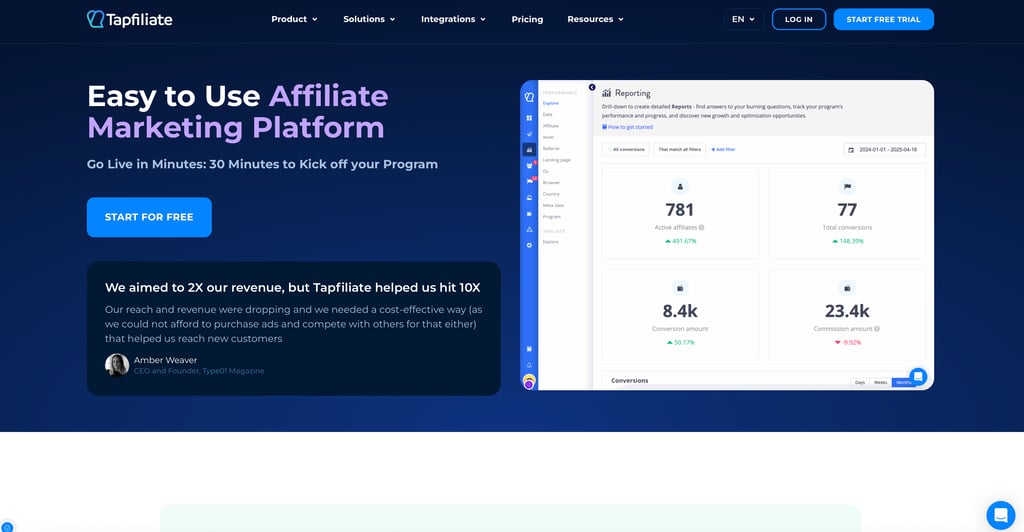
5. Tapfiliate – Best for Ease of Use
Tapfiliate is a cloud-based affiliate tool designed for simplicity. It integrates easily with Shopify, WooCommerce, and Stripe, making setup fast for ecommerce brands.
Pros: Clean interface, 30+ integrations, supports recurring commissions.
Cons: Limited advanced customization and higher tiers can get pricey.
Best for: Small to mid-sized ecommerce and SaaS businesses.
6. ShareASale – Best Network for Small Retailers
ShareASale is a long-running affiliate network that gives merchants instant access to over one million affiliates. It’s part of the Awin Group and trusted by thousands of online retailers.
Pros: Large affiliate pool, simple setup, transparent fees.
Cons: $625 setup fee and a 20% network cut on affiliate payouts.
Best for: Small to mid-sized retailers who prefer a ready-made network.
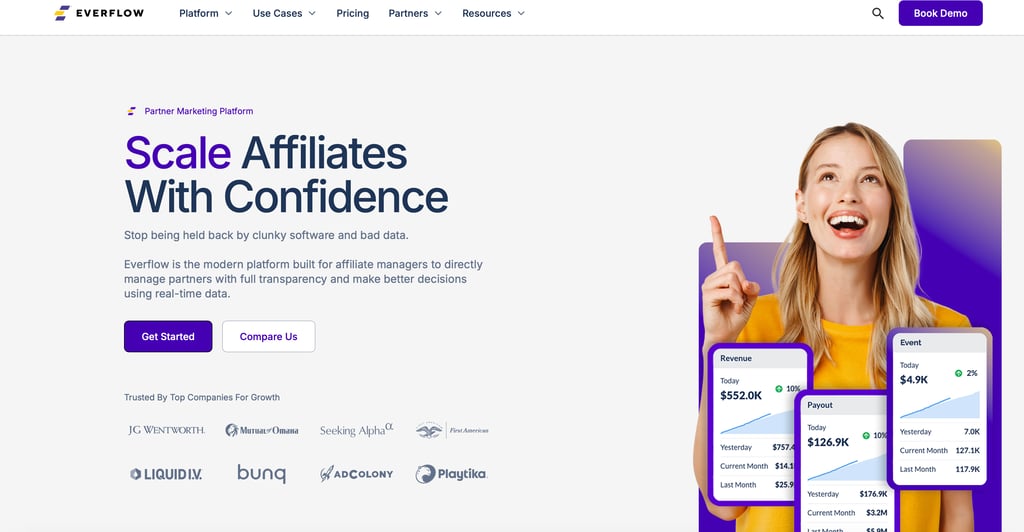
4. Everflow – Best for Performance Marketing Agencies
Everflow is a high-end platform built for large-scale performance marketing. It tracks every click and conversion with precision and offers strong fraud detection and automation.
Pros: Enterprise-grade analytics, fraud protection, and unlimited scalability.
Cons: High cost (around $750/month) and complex setup for beginners.
Best for: Agencies and advanced advertisers managing multiple channels.
2. TUNE (HasOffers) – Best for Customization
TUNE is a white-label affiliate platform known for flexibility and control. It lets brands or networks customize nearly every part of their program using robust APIs.
Pros: Highly configurable, supports complex programs, detailed reporting.
Cons: Expensive for small businesses (starting around $899/month) and setup can be technical.
Best for: Established programs or agencies managing multiple offers.
3. Trackdesk – Best Value for Startups
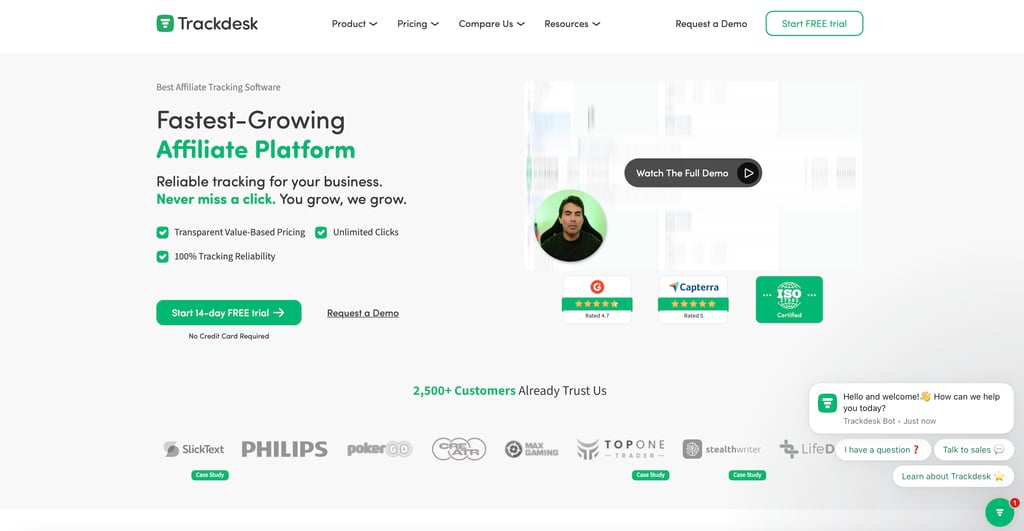
Trackdesk provides affordable affiliate tracking with clear, scalable pricing. It offers unlimited affiliates and clicks on every plan, with automation for payouts and reports.
Pros: Transparent pricing (from $67/month), unlimited affiliates, and easy setup.
Cons: Fewer advanced analytics tools and integrations than enterprise solutions.
Best for: Startups and SMBs launching their first affiliate program.







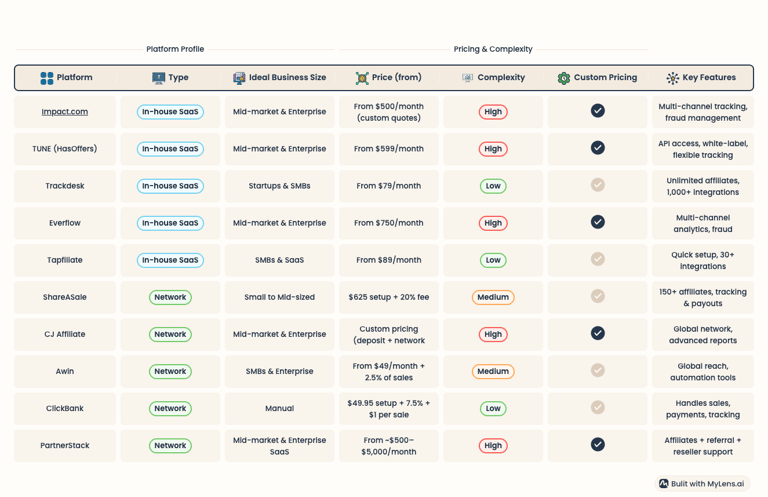
Top 10 Affiliate Management Platforms in 2025 – Comparison Table